About Me

My photo
Thank you for visiting my blog. I’m a scholar of television, film, and digital media, and the author of CINEMA OF CONFINEMENT (Northwestern University Press) and CAPTURING DIGITAL MEDIA (Bloomsbury Academic). I’ve published a variety of articles on film and television in journals published by Taylor & Francis. I am also a writer of fiction. All of my books can be viewed on www.tomconnellyfiction.com
Showing posts with label Jacques Lacan. Show all posts

Thursday, November 20, 2025

The Subject of Torture - Book Review


Hilary Neroni’s book explores depictions of torture in popular media. The introduction begins by contrasting biopower with the psychoanalytic notion of the desiring subject. Biopolitics focuses on the body, such as Giorgio Agamben notion of bare life, where truth is located in the body itself. In contrast, psychoanalysis emphasizes the divided subject and unconscious desire, where truth resides in desire and must be read and interpreted.  


According to Neroni, this is what shows such as Alias tap into. Instead of relying on the torture of bodies to extract truth, as in 24 with Jack Bauer (Kiefer Sutherland), Alias draws out the subject’s unconscious desire through Sydney’s (Jennifer Garner) staged fictions and performed identities. By doing so, Sydney can read and interpret the subject’s desire to uncover the truth, rather than depending on bodily torture.


Neroni’s book is a great read, especially for those interested in psychoanalytic theory and media. Her writing is highly accessible and supported by strong examples. I highly recommend it.


Sunday, November 2, 2025

Watched and Read - November 2, 2025


Here’s what I watched and read last week….

MOVIES

Weapons (2025) is an excellent film that challenged my formal expectations. I was surprised by Zach Cregger’s non-linear approach to storytelling, and I didn’t expect such a strong blend of humor and disturbing horror. Having done extensive research on Alfred Hitchcock—who often inserted jokes into his films—I’ve learned that movies combining humor and horror tend to create an uncertain spectatorship, preventing viewers from finding a secure foothold. I certainly found this to be the case with Weapons. It’s definitely one of the best films I’ve seen this year.

Les Diaboliques (1955), directed by Henri-Georges Clouzot, is a significant film in the horror genre. Hitchcock screened it several times while making Vertigo, which was based on a novel by the same authors who wrote Les Diaboliques. The Criterion Channel has an excellent video about it. I won’t say much about the film itself—it’s best experienced without spoilers—but I highly recommend it. I also suggest Clouzot’s other masterpiece, The Wages of Fear (1953), which inspired William Friedkin’s Sorcerer (another masterpiece).

The Shining (1980) is the film that inspired me to study cinema. I watch it every year during Halloween. Earlier this year, I read TASCHEN’s book on the making of the film, which I highly recommend. I also wrote a chapter about The Shining as an example of “confinement cinema” in my own book.

Napoleon Dynamite (2004) is a hilarious indie comedy. I love its offbeat humor, and the relationships between the characters work wonderfully. And, of course, Napoleon’s dance to Jamiroquai is an absolute classic. “Tina, eat your food!”

A House of Dynamite (2025) is an intense film. I love the way Bigelow structured the story. The performances are excellent, especially those by Idris Elba and Jared Harris. The film invites us to consider a powerful question: if you were in the President’s position—knowing a missile was heading toward one of our major cities and could wipe out millions of people—what would you do?


TV

Mr. Scorsese (2025) is an excellent documentary about one of our greatest filmmakers. I was surprised by how much I learned, especially about his struggles during the late 1970s and into the 1980s, when the power of the auteur was being crushed by the major studios. My only complaint is that I wish there were more episodes!

It: Welcome to Derry (2025). I’ve watched the first two episodes and thought they were very good. The series looks and feels very much like the It movies that Muschietti directed, and it features some impressive special effects. Having read the novel, I’m curious to see how the show incorporates the backstories King wrote. I think the ending of episode two alluded to one of those stories. So far, I’m really enjoying it.

Dept. Q (2025). The first season had lots of great twists. Carl, Rose, Akram, and James work really well as a team, though at times it was a bit hard to keep track of everything—especially with no recaps at the start of each episode. Still, I’m definitely looking forward to the next season.

Sticks (2025). I watched the first episode and thought it was okay. There wasn’t anything particularly surprising about it, but I really enjoyed seeing Owen Wilson and Marc Maron together.

It’s The Great Pumpkin, Charlie Brown (1966). We watch it every year on Halloween. I love the expressionistic animation—it really captures the fall vibes. The jazz score by Vince Guaraldi is also amazing. Truly a classic.


BOOKS

These are the books I finished this week. Some I had been reading over the past few weeks.

Universality and Identity Politics by Todd McGowan. McGowan’s central claim is that what binds us all together in the social order is that we all don’t belong. In other words, he identifies non-belonging as the site of the universal. McGowan makes a strong case that we should not abandon the universal, because it is also the site of our freedom. The concept is challenging, as we can never fully reach the universal—only strive toward it. The key, he suggests, is to detach from particularity or identity politics. Throughout the book, McGowan supports his argument with numerous examples from history and cinema.

The Bewitching by Silvia Garcia-Moreno is the third book I’ve read by her. I loved Mexican Gothic and The Daughter of Dr. Moreau, and I really enjoyed this new book, which centers on witches and sorcerers. I particularly appreciated the way the story is structured—it made the book very engaging.

Anxiety (Seminar X) by Jacques Lacan. It goes without saying that Lacan is notoriously difficult to read, but this seminar was a little bit easier to digest than his others. In it, he introduces a fundamental concept: objet a (the object cause of desire). The objet a creates lack for the subject when one enters the symbolic order. It is what prevents the subject from ever being fully identical with oneself, producing what Lacan calls the split subject. One of Lacan’s central claims is that anxiety arises from the “lack of lack.” If you want to explore objet a further, I discuss it in more detail on my blog. For beginners, I highly recommend Todd McGowan’s introductory book on Lacan or Slavoj Žižek’s Looking Awry.


Wednesday, August 13, 2025

Review - Todd McGowan's Introduction to Jacques Lacan

Todd McGowan's new book is an excellent read and important book for those who are interested in Lacan. Over the years, I have read a lot of Lacan, along with Zizek, McGowan, Copjec, etc, and this by far is one of the best introductory books with lots of great examples. 

Amazon.com: The Cambridge Introduction to Jacques Lacan (Cambridge  Introductions to Literature): 9781009300759: McGowan, Todd: Books 

I love McGowan’s interpretation of Kant and Hegel in contextualizing Lacan’s three stagesThe connection between Kant’s sensibility, understanding, and reason nicely line up with Lacan’s imaginary, symbolic and the Real in the first stage of Lacan’s work. But Lacan’s middle period turns to Hegel’s dialectic with his introduction of objet a (object cause of desire). McGowan claims that objet a, which is linked to the Real, is the fundamental object and perhaps one of Lacan’s greatest contributions


Georg Wilhelm Friedrich Hegel: The Phenomenology of Spirit (Cambridge Hegel  Translations): Hegel, Georg Wilhelm Fredrich, Pinkard, Terry, Baur,  Michael, Baur, Michael: 9780521855792: Amazon.com: Books 

An example is Lacan’s concept of the gaze (which should not be confused with the look). The gaze (as the visual drive) demonstrates how our unconscious desire distorts the visual plane, something we don’t recognize in the everyday, but something movies can make apparent. McGowan offers Spielberg’s Duel as a great example. Lacan's examples are paintings, such as Las Meninas (see image below). The painter is painting a couple who we think are in the mirror image, located in the far background. For Lacan, the canvas is too big to be the mirror image. The canvas embodies the gaze because it does not fit within the representational world of the painting. As McGowan explains, the canvas demonstrates a resistance toward representation. 

Las Meninas - Wikipedia  

Another example is The Ambassadors (see my blog post). When we encounter the gaze, we realize how our desire distorts the visual plane. The gaze is objet a within the field of vision. Encountering the gaze exemplifies that our spectatorship is not from a transcendent standpoint but within the painting or movie itself. That's where we locate the dialectic component of Lacan's work on desire.

I agree with McGowan that Lacan is the philosopher of the subject. The subject is always a split subject, a subject that is never at home with itself because of the unconscious. Lastly, it was great to read how many of Lacan’s concepts changed throughout his three periods, particularly the Real and jouissance. Highly recommend!

Wednesday, December 8, 2021

The Record Store Can Read My Desire

Damon Krukowksi's great book (and podcast) Ways of Hearing explores how digital media have transformed the way we hear. 


In the chapter on "power," he considers the difference between Spotify's "Discovery Weekly" and visiting a record store. Spotify's algorithm considers what you listen to, adapting to your tastes and likes. He notes, "At Spotify, the dream is to provide you with music without your participation-the algorithm will know what you want" (111).


But when we visit a record store, one has to navigate its space. As Krukowski states, "You adapt to it" (11). If you ever been to Amoeba in Los Angeles--clearly the case!


(Me at Amoeba Music)

By adapting to the store's layout, you might come across a surprise, maybe a record you hadn't thought about purchasing. This process involves your unconscious desire. As I explained in an earlier posting, the logic of desire operates on absence. The object cause of desire (what Jacques Lacan terms objet a) can never be satisfied.


At the same time, the object cause of desire sustains the psychical force of desire because it is unattainable. It is sometimes described as the real of one's desire. Real - meaning the impossible, or in this case, the stumbling block of desire. 

In a previous post on the gaze, I noted how cinematic forms can elicit our desire. Like the narrative and formal construction of a movie, the design and layout of a record store considers your desire. A record store is already designed for you to engage with it.

Not all stores will elicit your desire. But in my recent journey to Amoeba, the store reads my desire in how it displays its merchandise. It is not adapting to me (as Spotify does with Discovery Weekly), but is trying to elicit my unconscious desire in anticipating a surprise purchase.


But this raises a question: can algorithms such as Discover Weekly read your desire? In a podcast on the Lacanian Real with Todd McGowan, he argues they can't because they repeatedly tell you what you want.

I think McGowan's claim lines up with Slavoj Zizek's critique of technological singularity. For Zizek, singularity can't account for the unconscious. Likewise, algorithms don't know how to read our unconscious desire. 

Instead of a "surprise," (something unexpected which emerges from your encounter at a record store), you discover something new with Discover Weekly, which is based on your tastes. As Krukowski writes, "You find the answers you want to the questions you already know to ask. . . . This makes an ideal experience if all you want is what you want. But what if you're looking for something else?" (112). That "something else" is what Lacan call objet a which algorithms can not provide. 

Another way to think about algorithms is they operate on mastery. By contrast, a record store operates on both absence ("something else") and mastery ("all"). As you navigate the story, you try to master it. At the same time, what draws you into the store is absence (unconscious desire).

Wednesday, January 16, 2019

Desire, Coca-Cola, Zizek and Cinema

Following up on my last post on the gaze, I thought it would be important to explain a little bit of Lacan's concept of desire


Desire is the desire to desire. What does this mean? For Lacan, the logic of desire operates on lack, not fullness. Think of your favorite song that you listen to over and over, or watching a movie such as Star Wars or The Lord of the Rings repetitively. 


For Lacan, these "empirical" objects stand in for what he terms the object cause of desire, or sometimes referred to as the "lost object." As long as the lost object remains lost, desire sustains its force. Listening to a favorite song or watching a movie repeatedly - both objects stand in for the lost object, but can never be the "thing" itself. And because this empirical object (song, movie, book, coffee, etc.) can not fill the shoes of the psychical lost object, desire continues to desire. 


Slavoj Žižek offers a great example of the lost object using Coca-Cola's old slogan: "Coke is It." Žižek asks: What is this "it"? Why do we keep drinking coke if "it" is indeed "it"? There is a failure in drinking Coca-Cola that keeps us drinking more. Why? Because Coke is not it. This is the logic of desire.  As long as we keep "missing" the lost object, desire continues to desire.


Desire also has a temporal component which can be found in classical Hollywood narrative.  Classical narrative films exemplify the notion of desire because they demonstrate that the story's solution resides in the future. Die Hard (1987) is a great example of the logic of desire and classical narrative form. 


John McClane (Bruce Willis) finds himself alone in the Nakatomi building where Hans Gruber (Alan Rickman) and his group of thieves seize the tower and hold a group of employees hostage, including John's estranged wife, Holly (Bonnie Beldelia). John's goal is to outsmart Hans. John is constantly backed into a corner as we wonder how he will survive. The goal is for John to win - to reach his goal - to defeat Gruber. 

It is no surprise that this winning aspect of desire has a strong correlation to the logic of capitalism as explored in Todd McGowan's outstanding book, Capitalism and Desire.


Lastly,  although desire operates on lack, it paradoxically provides the subject pleasure. This is why Lacan argues that the lack of lack (to be lacking lack) equals anxiety. We enjoy our desire. For example, I love to collect DVDs. I think the worse thing that can happen to me is to lose my desire for buying DVDs.

Saturday, January 12, 2019

The Lacanian Gaze and Psycho

The Lacanian gaze is one of the hardest concepts I teach for my Film Theory course. The way we commonly think of the gaze (to look) is not what Jacques Lacan argues. Rather, he argues that when we encounter the gaze, we encounter an impasse, a blind spot within the field of vision. As Todd McGowan states, "the gaze is a distortion within the visual field" (72). The gaze is how our unconscious desire distorts the visual plane. But because this process is unconscious, the field of vision appears objective. The visible field is not objective but mediated by our desire. Movies can express the distorting effect of the gaze. 

One of the important things that must happen in order to encounter the gaze is that you must be invested in the film. That way, when we encounter the gaze in cinema it demonstrates the activity of our unconscious desire. So what does that mean? And why is the gaze is not defined as the look?


One of the best examples of the gaze (from Slavoj Zizek and Todd McGowan) can be found in Alfred Hitchcock's Psycho (1960). After Marion (Janet Leigh) has been murdered by "mother" in the shower, Norman Bates (Anthony Perkins) cleans up the mess. Notice how long it takes for Norman to clean the bathroom. This is important because Hitchcock is a laying a trap for our encounter with the gaze.


After Norman cleans the bathroom, he place Marion's body in the trunk of her car and drives out to the swamp near his motel. Norman pushes Marion's car into the swamp. Norman anxiously watches the car as it begins to sink. Suddenly, for a brief moment the car stop sinking. I always ask my students what their reaction was when the car stops sinking. Their response: they want the car to sink. How does this happen? Why are we suddenly complicit in Norman's cover up of the murder?


This is the moment when we encounter the gaze. The gaze demonstrates your unconscious desire at work in the film. The gaze is an absent structure at work in the scopic field. The halting of the car in the swamp makes this evidence. This is why film form is so important to understand in studying the gaze in cinema. In my book Cinema of Confinement, I explain how directors set up these types of cinematic moments such as the swamp scene in Psycho. They are designed so that we encounter the shocking impact of the gaze.


An example I use is the final sequence in Alien (1979) when Ripley (Sigourney Weaver) learns that the alien sneaked aboard the escape shuttle. The way in which director Ridley Scott films this scene sets up the viewer for an encounter with the gaze--namely, when Ripley shockingly discovers the alien. We think Ripley has defeated the alien, which is emphasized when she says: "I got you, you son of a bitch." Even the soothing musical score suggests that Ripley is safe. But as we know, she is far from safe. Alien's final scene is so scary because of the way Scott lays a trap for us to encounter the gaze. This is why it is important that Hitchcock show us all the details of Norman cleaning up the murder in Psycho. He is a laying a trap for the gaze: when the car stops sinking in the swamp. That's when we all go "Oh shit!" You're now siding with Norman's cover up of Marion's death.

What does the gaze tells about how we watch movies? First, it demonstrates how our unconscious desire is at work when we watch a movie. And we can locate the activity of desire through cinematic form. Second, you must be invested to look in the movie, otherwise you are less likely to encounter the emotional impact of the gaze. Lacan's example of Hans Holbein's painting The Ambassadors explains this point.

As you observe the painting, you see the riches that surround the men. But when looking  toward the bottom of the painting, there is a stain. When looking awry, you see that the stain is a skull that looks back at you.


The skull reveals the gaze as objet petit a in the field of vision. This is why you have to be invested in looking at the painting in order to discover the skull. When we encounter the skull, it takes our desire into consideration. Likewise, when Marion's car stops sinking in the swamp in Psycho, we have a visceral reaction, demonstrating that we are complicit in Norman covering up the murder. It illustrates how our desire is at work in the film. Yet it is these moments in cinema, such as Ripley seeing the alien aboard the ship and Marion's car that temporarily stop sinking in the swamp, that draws us to the movies.
 
The gaze is no to look but an absent structure that distorts the field of vision. It emerges in the limits of our looking. Or as Lacan states in Seminar XI, "The gaze is presented to us only in the form of a strange contingency, symbolic of what we find on the horizon, as the thrust of our experience, namely, the lack that constitutes castration anxiety" (72-73).  For Lacan, castration anxiety is the what constitutes the subject as lacking when becoming a part of the symbolic order. This obstacle in seeing, the limits of the horizon, is the impossible object or objet petit a in the scopic field.
 
References:

Todd McGowan,  Psychoanalytic Film Theory and the Rules of the Game (New York: Bloomsbury, 2015).

Slavoj Zizek, "In his Bold Gaze"  in Everything You Always Wanted to Know About Lacan. . . .  But Were Afraid to Ask Hitchcock, ed. Slavoj Žižek (London: Verso, 1992). 
 
Jacques Lacan, Seminar XI: The Four Fundamental Concepts of Psychoanalysis, ed. Jacques-Alain Miller, trans. Alan Sheridan (New York: Norton, 1978),  

Tuesday, April 10, 2018

Some Excellent Books on Jacques Lacan

Over the winter I read a number of great academic books on Jacques Lacan. If you are interested in reading about the intersection of Lacanian thought and cinema, check out Matthew Flisfeder's book The Symbolic, The Sublime, and Slavoj Zizek's Theory of Film. Flisfeder's book offers an excellent introduction to a number of key Lacanian terms and concepts and how they are employed in a number of Zizek's writings on cinema. 

Image result for matthew flisfeder the symbolic 

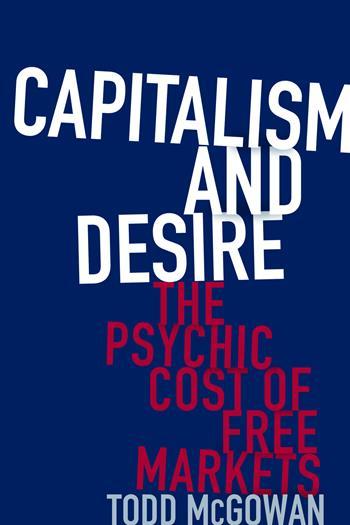
Todd McGowan's Capitalism and Desire is also worth checking out. McGowan examines the intimate relationship between the logic of desire and the logic of capitalism. Also, see my post on desire for introduction on this concept.

Image result for mcgowan capitalism and desire

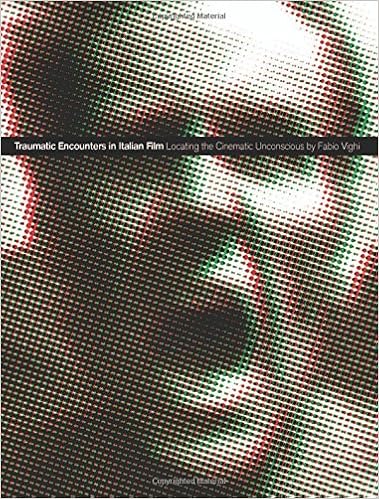
Another book worth checking out is Traumatic Encounters in Italian Film by Fabio Vighi.  This book examines the unconscious in relation to film language in Italian cinema. Vighi considers a variety of Italian films from filmmakers such as Pasolini, Bertolucci, and Rossellini. Vighi's reading of Michelangelo Antonioni's L'Avventura is indeed one of the film's many highlights.

Image result for Traumatic Encounters in Italian Film: Locating the Cinematic Unconscious

Watched and Read - December 7, 2025

  Here’s what I watched and read last week… MOVIES Four Rooms (1995) is featured on the Criterion Channel in a collection of films that ta...